'The difficulty lies not so much in developing new ideas as in escaping from old ones.’ - John Maynard Keynes.
Almost half the companies on the Fortune 500 list in 1999 have fallen off since. For business guru Peter Drucker, the major reason for the failure of companies is their inability to accept new realities, and adapt their strategies accordingly.
An IBM Global CEO Study published in 2010 identified that ‘rising business complexity calls for CEOs to lead with boldness, connect with customers in imaginative ways, and design their operations for speed and flexibility to position their organisations for 21st century success.’
Facing new business reality means letting go of the past to better envisage the future, and taking a risk by changing strategy. Netflix cannibalised its own DVD business through its aggressive promotion of video streaming. Instead of being fixated on a shrinking installed base of DVD subscribers, and stuck defending the old paradigm, Netflix embraced the new one, and changed its strategy to position itself in what is now a fast growing market of streaming entertainment.
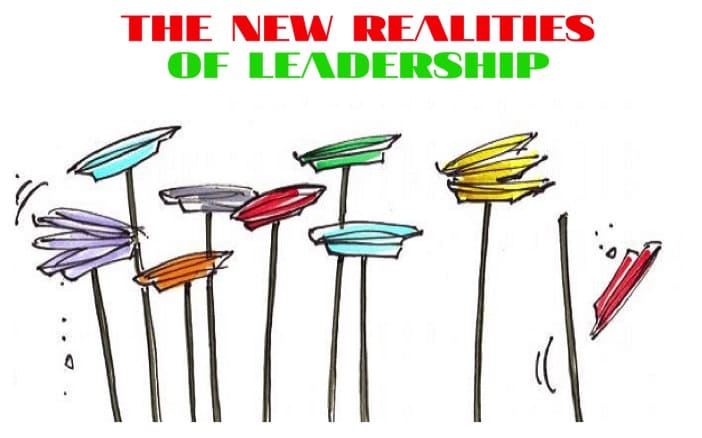
As the sustainable part of Michael Porter’s sustainable competitive advantage becomes more elusive, CEOs remain faced with the challenge of delivering performance in turbulent times. This seems akin to mastering the art of spinning multiple plates at the same time, as they learn new capabilities and develop new behaviours:-
1. Maintain a bird’s eye view of the business environment.
In today’s mantra of volatile and uncertain markets, CEOs have to keep a long-term view and identify the trends that will become significant i.e. the ones that have the potential to represent a fundamental shift in their business. This means being able to assess the nature of the change, anticipate the speed at which it will manifest itself, and determine its significance in terms of business impact and disruption. Change can take many forms from fundamental industry shifts, such as the rise of the ‘internet of things’, disruptive new competitors, or macro economic factors, such as the recent drop in the price of oil, or the rise of megacities. Different trends may also interact and intersect with each other, but not all are changing at the same pace, and the impact of change is dependent on the context of each specific business.
2. Become a systemic thinker and welcome change as an opportunity to grow.
Being able to separate the background noise from the fundamental shifts leads CEOs to prioritise where and on what to spend their energy and attention. Understanding the relevant risks helps CEOs to become comfortable with the change, so as not to miss opportunities or avoid being paralysed by inaction. It puts the emphasis on thinking more systematically about how to be both responsive and more organisationally resilient, as the company learns to react to external changes that matter. As a result, it becomes less likely to find oneself blindsided by unknowns. This multi-dimensional approach to understanding the full picture of the risks facing the company gives CEOs time to plan a range of responses, and choose and execute as appropriate. It also represents an edge, as it pushes the company to think differently, and to identify new forms of competitive advantages.
3. Develop a more participative and engaging leadership style.
Although CEOs are still expected to be the ultimate decision-makers providing clarity and direction, it is becoming more difficult in times of complexity and uncertainty. CEOs need to nurture a certain level of professional doubt, and balance experience-based rules of thumb and gut instinct with a more participative approach. Instead of giving the answer, today’s CEOs set the stage and the context, and then have other people work out the pieces within it. This means developing skills such as asking the right questions, sustaining curiosity and suspending belief, creating an environment where honest and constructive debate is expected, listening, and showing that one can change ones’ views based on the input of others. Engaging with more stakeholders from across the company, thus ensuring diversity of thought, provides protection against over confidence and a false sense of security. It is an efficient way to manage decision-making risks, including the one of being blindsided by one’s frames and cognitive biases.
4. Become a values-driven adaptable leader.
The role of CEO is becoming more complex as past experience is no longer a reliable guide for future action. CEOs become on-going, iterative learners as success today hinges on continual growth in the role. The challenge is to become adaptable, while remaining authentic to one’s own values, and maintaining the trust of the numerous stakeholders in the company. This requires humility - to admit when one has got it wrong and deal with it – but also courage - to see that change needs to happen and make those decisions one believes to be the right ones, in spite of the potential downside to oneself. To adapt authentically, personal values and motivations need to be aligned and compatible with the company’s purpose, and where it is going. Decisions are supported by both factual information CEOs gather, and the personal values they hold. As CEOs align the company behind their decisions, they become more credible when communicating the reasons behind such decisions i.e. they reflect the conviction they personally stand for, thereby protecting their authenticity.
A recent CEO report published by the Said Business School at Oxford University explores the issues of 21st century leadership, and captures the views of 150 CEOs around the central question of ‘how do senior executives develop the competence to lead in a changing world?’ The views captured point to the inconvenient contradictions of leadership in the 21st century. Managing those tensions help CEOs keep their eyes on all their spinning plates, and identify when interventions are needed to keep the company aligned with its top priorities.
More information on Said Business School’s CEO report can be found HERE
by Christelle Espinasse - inSTRATEGIA